Dilemmas Quiz
- 0.0
- Rating
- 100.00K
- Installs
- Free
- Price

 Analysis by App-foxy
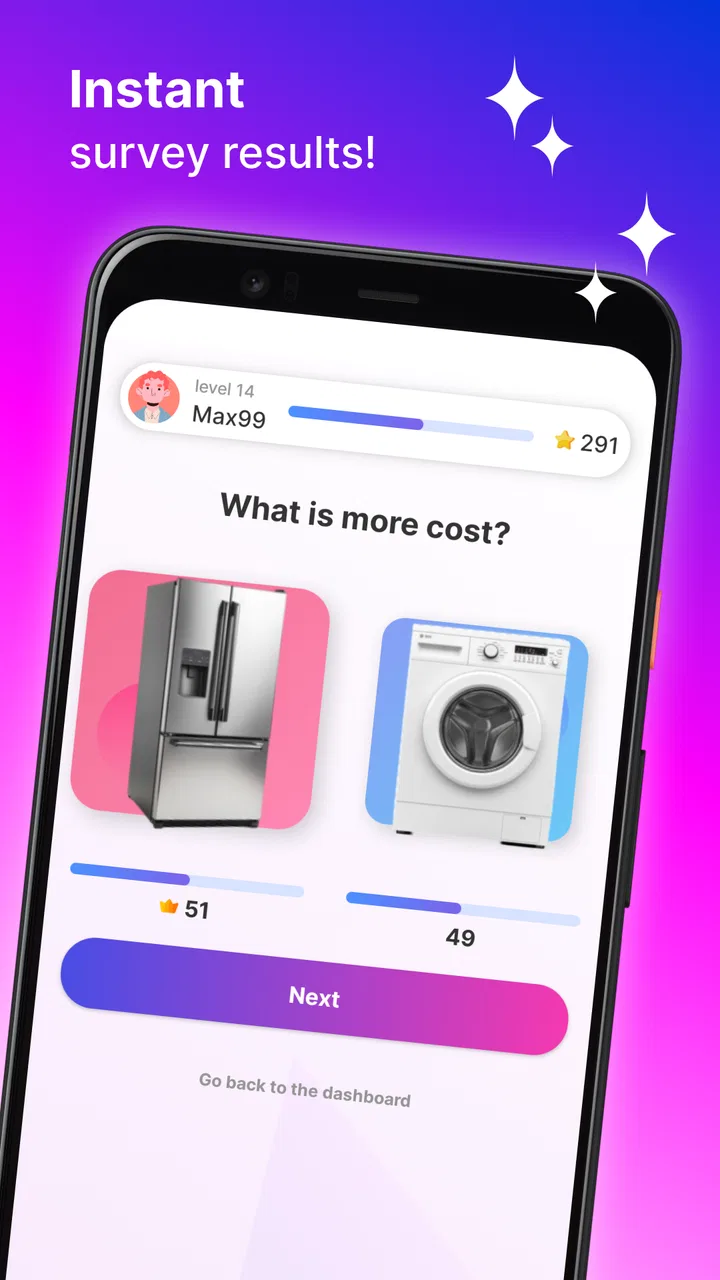
I approached Dilemmas Quiz as a quick decision game rather than a traditional knowledge test. Its central idea is simple: you are shown a dilemma, you choose an option, and then you discover how other people responded. That makes it feel closer to a social opinion game than a quiz where one answer is objectively correct.
That distinction matters from the first tap. I did not open it expecting detailed explanations, timed rounds, or a lesson at the end. The appeal is the choice itself and the curiosity that follows. If you enjoy asking friends “which would you pick?” and then comparing answers, this is the kind of lightweight trivia experience that can fit naturally into a short break.
The game is free, aimed at everyone, and comes from carrot_quiz. It reached Android with its release on December 25, 2023, and the current version is 0.3.2. It requires Android 6.0 or later, so it should be accessible on many older phones as well as newer devices. The store page shows over 100 thousand installs, while the displayed average rating is 0.0, so I would judge it by the actual style of play rather than treating the rating figure as a useful guide.
You May Also Like

 Blood Strike: 2.5 Anniversary
Blood Strike’s Loadouts Turn Every Drop Into a Tactical Gamble
A close look at Blood Strike’s custom loadouts: how fast access to signature weapons reshapes its battle royale rhythm, rewards preparation, and narrows the gap between fights.

 Pandora - Music & Podcasts
Pandora’s Music Is Easy to Start, but Harder to Recover
Pandora’s strength is its low-effort path from a seed to a station. Its weak spot is how much confidence it asks you to place in connection, setup, and quiet recovery.

 8 Ball Pool
 Is Built on Rivalries, Rematches, and Routine
A close look at the rivalries, rematches, shared routines, and unanswered safety questions that turn a quick pool match into a persistent mobile community.

 Samsung Music
’s Quiet Strength Is Playing What You Already Own
Its reach comes less from spectacle than from dependable access to a personal library. That simplicity is both the app’s strongest retention engine and its ceiling.

 AccuWeather: Weather Radar
AccuWeather Review: A Quick, Clear Forecast for Everyday Decisions
For everyday plans, the best forecast is the one you can understand quickly. AccuWeather makes rain timing, radar, and local conditions easy to act on, with a few trade-offs.

 Hill Climb Racing
Why Hill Climb Racing Still Turns Crashes Into One More Run
A tiny car, a bumpy hill and one more upgrade: Hill Climb Racing keeps resurfacing because its simple chaos makes every near-miss feel personal.
More From Our News Desk



What the first session feels like
The best way to understand the game is to think of each prompt as a conversation starter. You are not trying to remember a capital city, identify a song, or solve a complicated puzzle. Instead, you make a personal choice between alternatives and see the wider opinion attached to that choice. The result gives the session a small moment of anticipation: I knew what I would choose, but I still wanted to see whether the broader response matched my instinct.
This setup makes the game approachable for people who usually avoid trivia apps. There is no pressure to be an expert, and a wrong choice does not carry the same sting as missing a factual question. A dilemma can be answered from personal taste, habits, priorities, or simple mood. That gives the game a more relaxed character than conventional quiz apps built around correct answers.
It also works well as a shared activity. For example, I can imagine opening it while waiting for a friend at a café, choosing an answer independently, and then comparing both the personal choice and the wider opinion. The interesting part is not merely agreeing. A surprising difference can lead to a much better conversation than a routine question about general knowledge.
At the same time, this format will not satisfy every trivia fan. If you want a large learning component, explanations for every answer, score progression, or a strong competitive structure, the basic dilemma format may feel too light. Its strength is immediate interaction, not depth. I would recommend it to someone looking for quick social entertainment, but I would not replace a full quiz platform with it if learning and measurable improvement are the main goals.
Why the choice-and-opinion loop works
The small loop is effective because it has two stages. First, I commit to an answer without knowing how popular it will be. Then I receive the opinion comparison, which gives the choice a payoff. That second stage is important: without it, the game would be little more than a series of questions. The opinion result turns each decision into a tiny prediction exercise.
A useful way to play is to pause briefly before selecting an option. I found that this makes the comparison more interesting because I am not choosing randomly just to move forward. I can ask myself whether I am picking what I personally prefer, what I think most people will choose, or what seems more practical. Those are different approaches, and switching between them gives the same simple format more variety.
There is also a subtle trade-off in the design. Because the game is based on opinions, a result should not be treated as proof that one option is better. A popular answer is only the choice that attracted more support in the game’s audience. Keeping that in mind prevents the comparison from feeling like a judgment of personal taste.
Getting started without overthinking the setup
For a first-time user, the smoothest approach is to install the game, open it, and begin with the first available dilemma rather than searching for a perfect strategy. The experience is built around making a choice, so there is no reason to delay the first meaningful action. I would keep the first session casual and use it to learn how the prompts and opinion results are presented.
The Android requirement is modest, which is helpful if you are using an older handset. I would still make sure the phone is running Android 6.0 or newer before trying to install it. Since the game is free, the initial decision is not about committing money; it is about whether this particular style of short-form interaction suits you.
One practical tip is to begin when you have a few uninterrupted minutes. The game is easy to pick up, but the comparison after each answer is the part worth noticing. Opening it while distracted can turn the session into automatic tapping, which removes much of the curiosity that makes the format enjoyable.
I also recommend playing the first few dilemmas alone before introducing them to friends. That gives you a clear sense of whether you prefer answering sincerely or predicting the majority. Once you understand your own approach, the game becomes easier to use as a conversation tool rather than just a sequence of taps.
The first successful action is simply making a considered choice
In many games, the first success means clearing a level or earning a reward. Here, I see success differently: read the dilemma, choose the option that genuinely fits you, and check the resulting opinion. That complete cycle is the core experience. You do not need specialist knowledge, a long tutorial, or a complicated plan to reach it.
For a more satisfying first attempt, I would avoid choosing based only on which option appears first. Read both sides and decide what the question is really asking. Some dilemmas invite an emotional response, while others are better answered by thinking about daily convenience. Taking that extra moment makes the final comparison more meaningful.
A second useful approach is to remember your prediction before seeing the result. Try to estimate whether your choice will be common or unusual, then compare that expectation with the displayed opinion. This turns a passive result into a small exercise in reading group preferences. It is a simple habit, but it adds a layer that is easy to miss if you rush through every prompt.
When playing with another person, make both choices before revealing the wider opinion. That creates three points of comparison: your answer, the other player’s answer, and the broader result. It avoids letting the displayed majority influence the personal discussion and makes disagreements more revealing.
Where new users may become confused
The biggest possible misunderstanding is assuming that this is a factual quiz with a hidden correct answer. It is better approached as an opinion-based trivia game. If one option receives more support, that does not automatically make it the sensible or morally superior choice. The outcome describes preference, not truth.
Another point to understand is that the game’s value depends on how much you enjoy the prompts themselves. Players who need elaborate rules may find the experience spare. There is no reason to invent a scoring system in your head or expect every round to produce a deep debate. Some choices will be instantly clear, while others may be more interesting because they expose a difference between personal taste and majority opinion.
I would also avoid judging the whole game from one short visit. The first few dilemmas mainly show you the mechanic. The better test is whether you enjoy repeating the choice-and-comparison cycle. If that loop feels satisfying, the game can work as a regular time filler. If it feels empty after the novelty of the first prompts fades, more feature-heavy quiz alternatives will probably suit you better.
The displayed rating deserves a careful interpretation too. An average of 0.0 is visible, but it does not give me a useful basis for deciding how enjoyable the game will be. The install figure shows that the app has attracted a meaningful audience, yet popularity alone cannot tell me whether its opinion-comparison format matches my preferences. I would treat both details as context, not as a substitute for trying the core interaction.
How it compares with ordinary quiz alternatives
Compared with general-knowledge quiz games, this one is less demanding and less educational. A conventional quiz rewards recall and usually tells you whether you were right. Dilemmas Quiz rewards curiosity about how people think. That makes it a better choice for a relaxed social moment, but a weaker choice for someone who wants to build knowledge or track factual accuracy.
Compared with poll or survey apps, it is more playful. A survey usually asks for an opinion without making the act of answering feel like a game. Here, the dilemma framing gives the response a quick entertainment value. The trade-off is that a dedicated polling tool is normally better when I need to ask my own question, collect targeted responses, or organize results for a practical purpose.
Compared with party games, it is easier to start but potentially less substantial. I would not choose it for a large gathering that needs elaborate rounds, teams, or a strong winner. I would choose it for two people, a small group, or a solo player who wants a low-effort prompt to react to. Its accessibility is the advantage; its simplicity is also the limit.
Everyday situations where it fits best
One realistic use is a short waiting period. If I have a few minutes before an appointment, I can open the game, answer several dilemmas, and stop without needing to remember a level or protect a long run. That makes it less demanding than a game that expects a substantial uninterrupted session.
It can also work during a quiet evening with a partner or friend. Each person can answer before looking at the wider opinion, then explain the reasoning behind the choice. The most useful conversations may come from answers that seem obvious to one person but unusual to the other. In that setting, the app is less a competition and more a prompt generator.
For families, the everyone age rating makes the game broadly approachable, but I would still use personal judgment about which dilemmas are suitable for a particular child or group. The label makes the intended audience wide; it does not mean every question will be equally engaging for every age. Younger players may enjoy the immediate choice, while older players may spend more time discussing the reasoning.
I would skip it when I need a structured activity with a clear finish line. It is also not the right pick if I am looking for offline learning, detailed answer explanations, or a deep progression system. In those situations, a traditional trivia title or a dedicated educational game would offer a clearer benefit.
Small habits that make the experience better
My first recommendation is to alternate between honest answers and prediction mode. In honest mode, I choose what I would actually do. In prediction mode, I try to anticipate the majority. The contrast makes the opinion reveal more engaging and helps me notice when my own preference differs from what I expected other people to choose.
My second recommendation is to use the game as a discussion starter rather than tapping silently through it. After an unexpected result, ask why someone chose the less popular option. That turns a very compact game into a useful social activity without requiring extra equipment or preparation.
My third recommendation is to stop before the format becomes repetitive. Because the mechanic is intentionally simple, short sessions are likely to preserve its appeal better than forcing a long play period. I would return when I want a quick set of choices, not treat it like a game that must be completed in one sitting.
Finally, keep the opinion result in perspective. The most interesting outcome is not always the majority choice. Sometimes the valuable discovery is that the prompt does not divide people in the way you expected. That makes the app more rewarding for reflective players than for anyone focused only on collecting wins.
Who should try it and who should pass
I think this game is a good fit for first-time users who want an uncomplicated way to explore dilemmas and compare opinions. It is especially suitable for people who enjoy casual trivia, quick social prompts, and questions without a single factual solution. The free price removes a financial barrier, and the broad age rating makes it easy to consider for mixed-age use with sensible supervision.
I would recommend passing if your ideal quiz app needs detailed explanations, a visible knowledge journey, or increasingly difficult challenges. Players who prefer strategy, action, or a substantial campaign will probably find this experience too narrow. The same is true for anyone who dislikes opinion questions or becomes frustrated when a result does not provide a definitive answer.
The developer, carrot_quiz, has kept the central idea clear: make a decision and discover the wider response. That clarity is both the game’s strongest quality and its main constraint. There is little learning curve, but there is also less variety than in a quiz collection built around multiple subjects and mechanics.
My recommendation after trying the core loop
I came away seeing Dilemmas Quiz as a compact social trivia game rather than a replacement for a full quiz library. Its best moment arrives when I answer sincerely, make a prediction about the group, and then compare that prediction with the displayed opinion. The experience is quick, understandable, and easy to share in an ordinary situation.
The current version, 0.3.2, is worth considering if that focused loop sounds appealing and your device meets the Android requirement. I would begin with a short test session, pay attention to whether the opinion reveal adds genuine curiosity, and then decide whether it deserves a place among my regular time-fillers.
My honest verdict is that this is a good choice for casual conversation and quick decisions, not for deep trivia progression. Install it when you want a lightweight way to ask “what would you choose?” and see how the broader opinion compares. Skip it when you need lessons, complex competition, or a clearly correct answer every time.
FAQs for Dilemmas Quiz
01What is Dilemmas Quiz and how does it work?
Dilemmas Quiz is an interactive game that presents players with challenging and thought-provoking scenarios, requiring them to make difficult choices. Each dilemma is designed to test your decision-making skills and provoke critical thinking. The game offers a series of questions where you choose between two or more options, and your choices influence the outcome of the game.
02Is Dilemmas Quiz available on both Android and iOS devices?
Yes, Dilemmas Quiz is available for download on both Android and iOS platforms. You can find it on the Google Play Store for Android devices and the Apple App Store for iOS devices. Ensure your device meets the minimum system requirements for smooth gameplay.
03Does Dilemmas Quiz require an internet connection to play?
Dilemmas Quiz can be played offline, making it a great option for users who want to enjoy the game without an internet connection. However, some features, such as leaderboards or social sharing options, may require connectivity to fully access and enjoy these additional functionalities.
04Are there in-app purchases in Dilemmas Quiz, and are they necessary?
Dilemmas Quiz offers in-app purchases that can enhance your gaming experience, such as additional scenarios or customization options. However, these purchases are not necessary to enjoy the core gameplay. The game is designed to be fully enjoyable without spending any money, making it accessible to all users.
05How does Dilemmas Quiz handle user data and privacy?
Dilemmas Quiz adheres to strict privacy policies to protect user data. The app collects minimal information necessary for gameplay and ensures that any data collected is securely stored. Users are encouraged to review the app’s privacy policy for detailed information on data handling practices and to ensure their comfort with how their information is used.
Pros
- Engaging and thought-provoking questions.
- Visually appealing and user-friendly interface.
- Perfect for playing with friends and family.
- Regular updates with new content.
- Encourages critical thinking and debate.
Cons
- Limited categories might feel repetitive.
- Ads can be intrusive during gameplay.
- Requires internet connection to play.
- Some questions may feel too easy.
- In-app purchases can be pricey.

Dilemmas Quiz
Gallery